Telegram:@smsxcg
WhatsApp:+1(305)6290111
Address:1600 Pennsylvania Ave NW,Washington,DC20500,USA


BEIJING, March 4 (Xinhua) -- China on Wednesday began its annual "two sessions," an event that carries extra weight this year as it is set to unveil a new development plan for the world's second-largest economy.
More than 2,000 political advisors attended the opening of the fourth session of the 14th National Committee of the Chinese People's Political Consultative Conference (CPPCC), which is the country's top political advisory body.
Wang Huning, chairman of the CPPCC National Committee, delivered a report on the work of the Standing Committee of the CPPCC National Committee in the presence of President Xi Jinping and other Party and state leaders at the Great Hall of the People in Beijing.
The top political advisor applauded the solid new strides the country had made in modernization, noting that China had met the major economic and social development targets set for 2025 and brought the 14th Five-Year Plan (2021-2025) to a successful completion.
He called on fellow political advisors to rally public support, build greater consensus, and pool wisdom and strength in 2026 to help ensure a good start to the 15th Five-Year Plan period (2026-2030).
The CPPCC plays vital roles in multiparty cooperation and political consultation under the leadership of the Communist Party of China. Its members are drawn from political parties, people's organizations, personages without party affiliation and various sectors of society. They come from a wide range of backgrounds, such as scientists, entrepreneurs, doctors, teachers and lawyers. The session runs through March 11.
The annual session of China's top legislature, the National People's Congress, is set to commence on Thursday. Known collectively as the "two sessions," these annual gatherings are widely seen as a key window into China's developments, its political system, and the likely trajectory of its future path.
While headline indicators such as GDP objectives, defense budgets and foreign-policy signals keep their enduring appeal, the widely anticipated 15th Five-Year Plan stands as a focus of this year's agenda.
Lawmakers will deliberate on the draft plan in the days ahead. Once approved, it will navigate China through the end of the decade, advancing the country's long-term goal of building a great modern socialist country in all respects by the middle of the century.
The plan could drive a fundamental shift toward a more sophisticated, technology-driven and consumption-led future, with ripple effects extending far beyond China, geostrategic analyst Imran Khalid wrote in a Feb. 28 op-ed for Eurasia Review.
He described this year's sessions as a potential "watershed moment" for the global economy.
The legislative agenda for this political season includes deliberations on a draft environmental code, a draft law on ethnic unity and progress, and a draft law on national development planning. The proposed environmental code comes as China moves closer to its 2030 carbon-peaking target.
15TH FIVE-YEAR PLAN IN FOCUS
The formulation of the 15th Five-Year Plan continues a long line of national development blueprints that have helped shape China's modern trajectory. The first five-year plan was launched in the early 1950s.
This metronomic planning cycle, analysts say, helps channel resources where they are most needed and keeps policies on a consistent track, allowing the country to move forward in a gradual and predictable way rather than experiencing abrupt policy swings.
"The new plan has a strong base that we built during the 14th Five-Year Plan period. Big advances like progress in renewable energy give us confidence to keep pushing ahead into the next stage," said Wu Fenggang, a national political advisor and industrial economist at Jiangxi Institute of Socialism.
In 2025, China's GDP surpassed 140 trillion yuan (about 20 trillion U.S. dollars), while key targets in areas such as labor productivity, urbanization, average life expectancy, and research and development spending broadly met or exceeded expectations, international observers have said.
Looking forward, China faces growing external headwinds from geopolitical tensions, unilateralism and protectionism, as well as a sluggish global economy. Domestic challenges include insufficient demand, demographic pressure and transition to new growth drivers.
High-quality development is expected to define China in the coming years, according to recommendations that the Communist Party of China (CPC) Central Committee issued in October for the formulation of the new five-year plan.
The recommendations highlight new growth drivers, including hydrogen and nuclear fusion power, brain-computer interfaces, embodied AI, and 6G mobile communications, over the coming years.
Zhu Lianqing, a national political advisor and professor at Beijing Information Science and Technology University, said that more technologies will transition from labs into the real economy and appear in people's everyday lives in five years.
His team's research on optoelectronics and intelligent sensing has already contributed to China's recent breakthroughs in new materials, aerospace and the low-altitude economy.
"We have to step up our pace in developing emerging and future-oriented industries, and drive real, original innovation and breakthroughs in core technologies," he said.
During the weeklong session, political advisors will engage in intensive discussions on the draft 15th Five-Year Plan and submit proposals reflecting their expertise.
Such a consultative process has proved effective. Back in 2021, during the "two sessions" that finalized the 14th Five-Year Plan as well as China's long-range objectives through 2035, feedback from lawmakers and political advisors led to 55 revisions to the final document.
This process is not just about refining policy details, said Nan Cunhui, a national political advisor and chairman of a smart energy solution provider, who rose from a roadside cobbler.
"It is also a chance for us to build consensus, pool strength and motivate everyone, especially for the goals and tasks of the next five-year plan," Nan said.



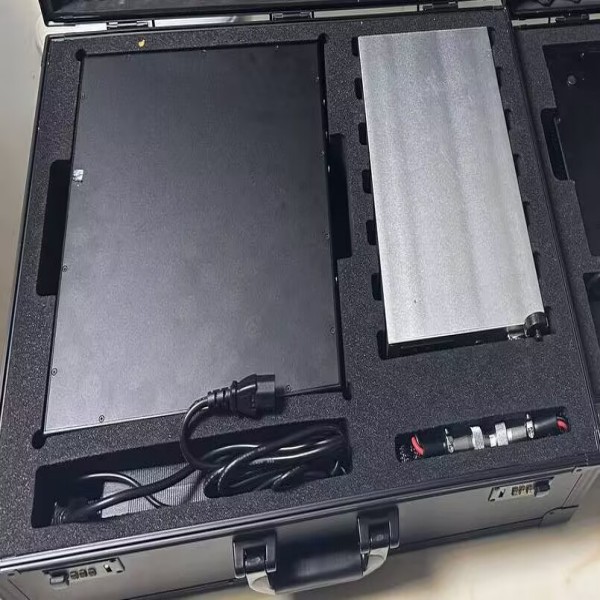
Sms Blaster Machine Famous Manufacturer.sms broadcaster machine price,sms blasting machine,SMS Broadcaster Machine,Bulk SMS Blaster,SMS Free Blasting Broadcast Machine.Sms Blaster Machine Can Bulk SMS automatically around you with radius 1000m-3km.We specializes in providing cutting-edge SMS advertising marketing equipment that allows businesses to reach their target audience more effectively!
Telegram:@smsxcg
WhatsApp:+1(305)6290111
Address:1600 Pennsylvania Ave NW,Washington,DC20500,USA