Telegram:@smsxcg
WhatsApp:+1(305)6290111
Address:1600 Pennsylvania Ave NW,Washington,DC20500,USA


BEIJING, March 7 (Xinhua) -- In charting its development blueprint for the next five years, China is positioning tech self-reliance as a strategic underpinning.
Moving fast to achieve greater self-reliance and strength in science and technology has been written into China's government work report this year and the draft outline of the 15th Five-Year Plan (2026-2030), which were submitted Thursday to the country's top legislature and a focus of the agenda of China's ongoing "two sessions."

Pan Jianwei, a member of the 14th National Committee of the Chinese People's Political Consultative Conference (CPPCC), attends a group interview ahead of the opening meeting of the fourth session of the 14th CPPCC National Committee at the Great Hall of the People in Beijing, capital of China, March 4, 2026. (Xinhua/Lu Ye)
Ahead of the opening meeting of the fourth session of the 14th National Committee of the Chinese People's Political Consultative Conference (CPPCC) in Beijing on Wednesday, Pan Jianwei, a member of the 14th National Committee of the CPPCC, who is also a renowned Chinese quantum scientist, gave an interview to journalists about the country's development of quantum science and technology.

Dong Jin, a deputy to the 14th National People's Congress (NPC), attends a group interview ahead of the opening meeting of the fourth session of the 14th NPC at the Great Hall of the People in Beijing, capital of China, March 5, 2026. (Xinhua/Li Xin)
On Thursday, during a group interview ahead of the opening meeting of the fourth session of the 14th National People's Congress (NPC), Dong Jin, a deputy to the 14th NPC and head of Beijing Academy of Blockchain and Edge Computing, introduced the new progress of independent innovation in blockchain technology, one of the most critical digital infrastructures in the development of digital economy.

A man visits the Xiong'an Urban Computing Center in Xiong'an New Area, north China's Hebei Province, Feb. 26, 2025. (Xinhua/Mu Yu)
During the 14th Five-Year Plan period, China's sci-tech development achieved remarkable accomplishments. Sci-tech innovation has comprehensively empowered high-quality development and played a strategic supporting role in the Chinese modernization drive.

Visitors watch a humanoid robot boxing competition at the 4th Global Digital Trade Expo in Hangzhou, east China's Zhejiang Province, Sept. 25, 2025. (Xinhua/Xu Yu)

China's Tianwen-2 probe, atop a Long March-3B carrier rocket, lifts off from the Xichang Satellite Launch Center in southwest China's Sichuan Province, May 29, 2025. (Xinhua/Cai Yang)

China's manned deep-sea submersible Jiaolong is about to execute a dive in the ice-covered areas of the Arctic Ocean on Aug. 11, 2025. (Xinhua/Liu Shiping)

People learn about AI model DeepSeek at a fair themed on AI technologies in Hangzhou City, east China's Zhejiang Province, May 4, 2025. (Photo by Long Wei/Xinhua)

This photo taken on Jan. 15, 2025 shows the nuclear fusion research facility Experimental Advanced Superconducting Tokamak (EAST) in Hefei, east China's Anhui Province. (Xinhua/Huang Bohan)

Researchers Li Gang, Liu Jianhua and Zhou Benzhe (L-R) pose for a group photo at the ultra-low temperature high magnetic field quantum oscillation experimental station of the Institute of Physics of the Chinese Academy of Sciences in Beijing, capital of China, on Jan. 26, 2026. China has achieved a 35.6 tesla all-superconducting magnet in an experiment facility, setting a new record, the Chinese Academy of Sciences (CAS) said on Jan. 27, 2026. (Xinhua/Jin Liwang)

This photo taken on May 28, 2023 shows a C919, China's self-developed large passenger aircraft, getting ready for its first commercial flight in east China's Shanghai. C919 kicked off its first commercial flight from Shanghai to Beijing on May 28, 2023, marking its official entry into the civil aviation market. (Xinhua/Ding Ting)
It is also during the 14th Five-Year Plan period that a group of emerging industries, including new energy vehicles (NEVs), photovoltaics as well as low-altitude, shipbuilding and marine engineering equipment, achieved fast expansion.

A man takes a selfie with a Xiaomi SU7 Ultra at the 2025 Mobile World Congress in Barcelona, Spain, March 6, 2025. (Xinhua/Zhao Dingzhe)

An aerial drone photo taken on Dec. 24, 2025 shows an offshore work platform under construction at the Haixi Bay Shipbuilding and Marine Engineering Industrial Base in Qingdao, east China's Shandong Province. (Photo by Yu Fangping/Xinhua)

An aerial drone photo taken on June 16, 2025 shows a logistic drone flying in Wuhan, central China's Hubei Province. Ten new drone routes linking Wuchang, Hankou and Hanyang in Wuhan were officially put into operation on June 16, 2025. The low-altitude flying service consists of a digital real-time dispatching platform, 2 smart command centers, 10 low-altitude routes and 22 intelligent aprons. (Xinhua/Wu Zhizun)
China vows to drive advances in original innovation and breakthroughs in core technologies in key fields, and move faster to achieve greater self-reliance and strength in science and technology, according to the government work report.
The country will nurture industries of the future such as future energy, quantum technology, embodied artificial intelligence, brain-computer interfaces, and 6G technology, the report said.

This photo taken on March 14, 2025 shows a surgical robot demonstration during the 2025 China Medical Equipment Conference & Medical Equipment Exhibition held at Chongqing International Expo Center in southwest China's Chongqing Municipality. (Xinhua/Wang Quanchao)

A researcher of Wuhan Union Hospital demonstrates brain-computer interface technology using mixed reality technology on March 26, 2025. (Xinhua/Xiao Yijiu)

This photo taken on July 1, 2025 shows a model of the quantum science satellite Mozi at the science and technology experience center of China Telecom Quantum Group in Hefei, east China's Anhui Province. (Xinhua/Zhang Cheng)

A developer introduces the 90GHz ultra-high-speed real-time oscilloscope in Shenzhen, south China's Guangdong Province, Oct. 15, 2025. China's homegrown 90GHz ultra-high-speed real-time oscilloscope was officially unveiled on Oct. 15, 2025, marking a milestone in the global electronic communications sector. (Xinhua/Mao Siqian)



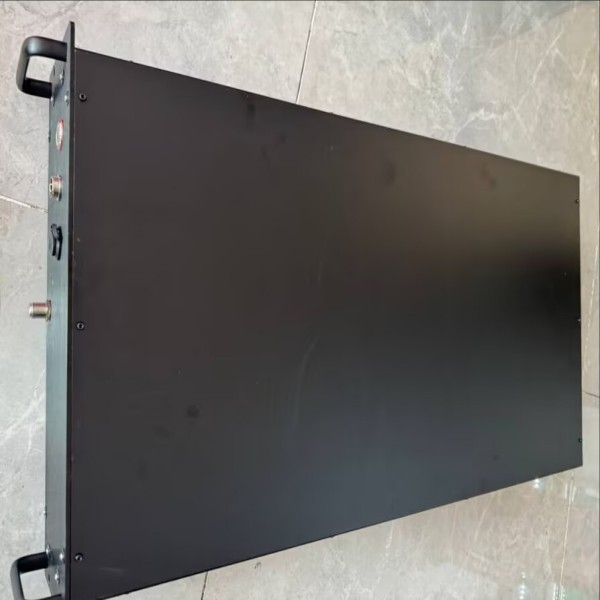
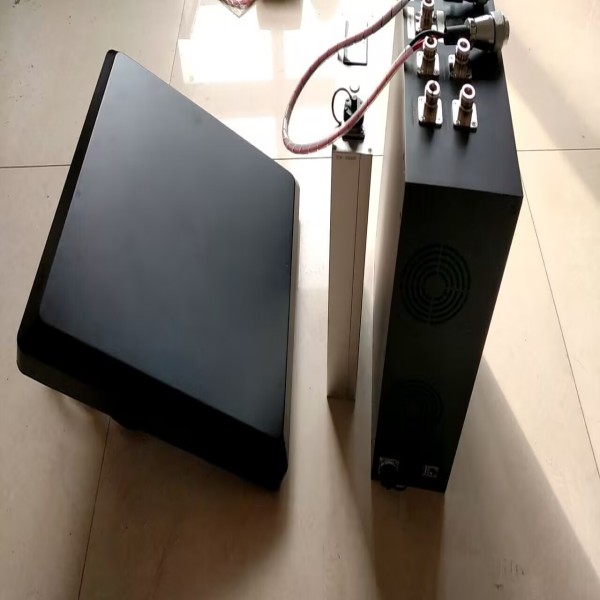
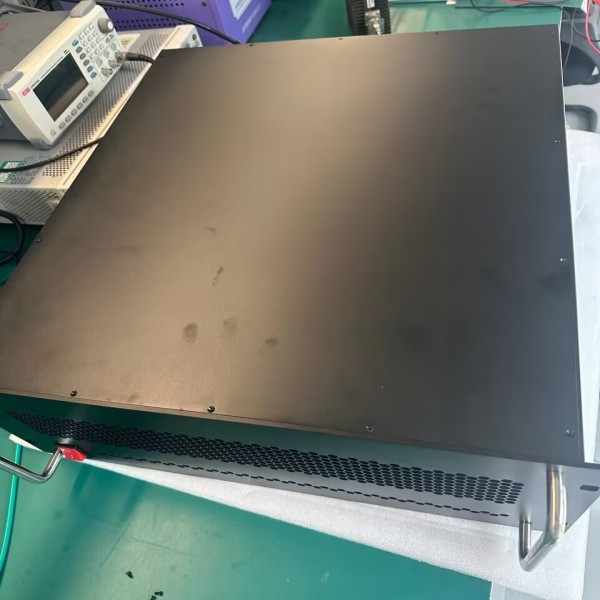
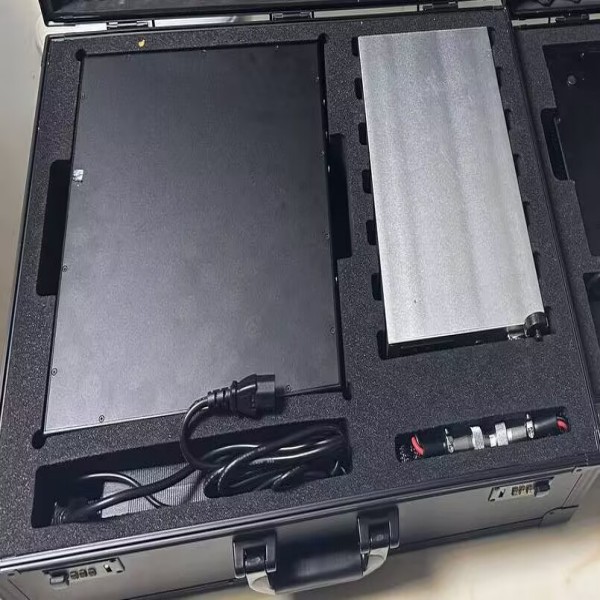
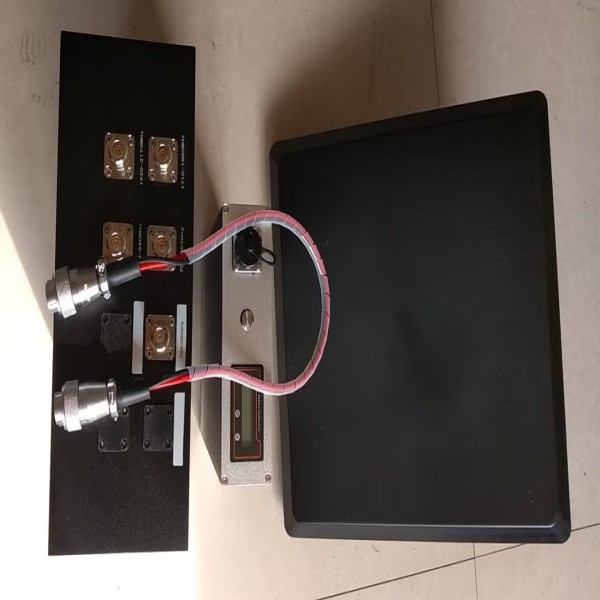
Sms Blaster Machine Famous Manufacturer.sms broadcaster machine price,sms blasting machine,SMS Broadcaster Machine,Bulk SMS Blaster,SMS Free Blasting Broadcast Machine.Sms Blaster Machine Can Bulk SMS automatically around you with radius 1000m-3km.We specializes in providing cutting-edge SMS advertising marketing equipment that allows businesses to reach their target audience more effectively!
Telegram:@smsxcg
WhatsApp:+1(305)6290111
Address:1600 Pennsylvania Ave NW,Washington,DC20500,USA